

Building a Career in Kinesiology, Exercise Science, and Physical Therapy
For Dr. Seehafer, curiosity has always been at the center of his career. Whether studying the complexities of the human body, treating patients as a physical therapist, mentoring undergraduate students, or researching injuries in professional women’s basketball, he is driven by a desire to better understand how people move and how that knowledge can improve lives. “I have always been passionate about science, particularly of the human body,” he said.
That passion first led him to earn a Bachelor of Arts in Exercise Science from Bethany Lutheran College in 2015 before completing his Doctor of Physical Therapy degree at the University of South Dakota in 2018.
“My education was rigorous, but I enjoyed the struggle, wrestling with complex topics and learning how to guide patients through their condition,” he recalled. “What always brought me the greatest joy, however, was helping my fellow classmates understand these topics better during study sessions. It was at that time I decided I wanted to be a professor.”
Today, Dr. Seehafer is fulfilling that goal as a full-time assistant professor in the Allied Health and Nursing Department at Bethany Lutheran College, where he teaches courses in human anatomy and physiology, cadaver dissection, kinesiology, motor learning, sports science, and more. At the same time, he continues practicing as a physical therapist at Mayo Clinic in Rochester, Minnesota, blending clinical expertise with classroom instruction. In 2025, he added another milestone to his journey by earning a PhD in Kinesiology through CSP Global’s online Doctorate in Kinesiology program.
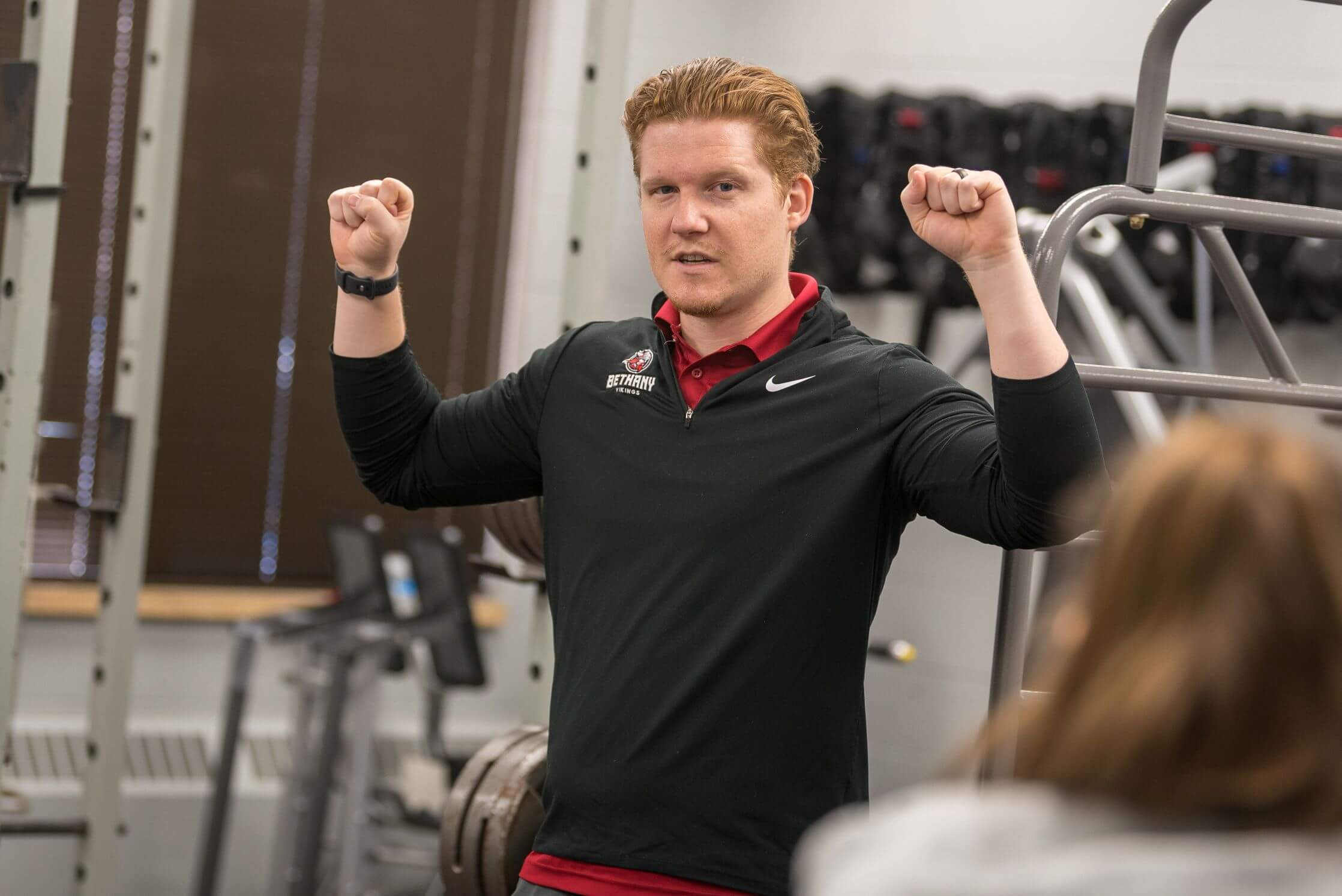
Dr. Lucas Seehafer teaching a lab session during his strength and conditioning course at Bethany Lutheran College. Photo Credit: Bethany Lutheran College/David Norris.
Why CSP Global’s Online Doctorate in Kinesiology Fit His Goals
When it came time to pursue a doctorate, flexibility wasn’t simply a convenience, but it was essential. “I was working full-time when I enrolled in CSP. The fact that it was online and self-paced was a huge draw to the program.”
For working professionals pursuing an online doctorate in kinesiology, balancing career responsibilities and doctoral study can be challenging. CSP Global’s doctoral kinesiology program allowed Dr. Seehafer to continue teaching and practicing while pursuing advanced research.
“I appreciated that I was able to choose my own research question and that CSP had a bevy of experts to serve on my dissertation committee,” Dr. Seehafer said.
While online learning isn’t the ideal environment for everyone, he found that the format complemented the way he learns best. “I was able to succeed as I am very self-motivated,” he explained. “In that sense, CSP’s program played to my strengths while still engaging me with a high-level curriculum. It was the perfect program for the stage of life I was in. It was flexible yet direct, and the faculty and staff were great to work with.”
Faculty Support in a Kinesiology Doctoral Program
Dr. Seehafer also credits the accessibility of CSP Global’s faculty with helping him navigate the online experience.
“I found the professors to be extremely accessible. They all promptly and thoroughly responded to my messages.”
Beyond faculty support, the university’s library resources proved invaluable throughout his doctoral journey: “I also found the library website to be useful, especially when conducting my literature review for my dissertation. The library has access to most major academic journals, which made the process very easy.”
Dissertation Research on WNBA Injury Trends
Throughout his academic career, Dr. Seehafer has been drawn to addressing topics that have largely been underexplored and populations that have been underrepresented in the research. That passion became the foundation of his dissertation research, which examined injury occurrence in the Women’s National Basketball Association (WNBA).
“Basic epidemiology hadn’t really been explored in that field,” he explained. “Women have been underrepresented in the academic literature, in general, and professional women’s basketball was no exception.”
Dr. Seehafer’s dissertation became the first study of its kind to monitor WNBA injuries in real time, creating a comprehensive injury database that continues to grow today. “My project showed that injury rates in the WNBA are much higher than previously reported in the academic literature, with evidence that they’re continuing to grow more or less year-over-year,” he said.
Rather than ending with graduation, the project has continued to evolve. Dr. Seehafer has expanded the database and published it through The IX, a publication dedicated to women’s sports, providing an open resource that researchers, journalists, and others can use to better understand injury trends across the league. “This database continues to show how injuries are impacting the women’s game at the highest level and has been included in discussions in and around the WNBA about how recent trends can be reversed.”
For him, the work represents more than a research project. It contributes to a growing body of applied kinesiology research that helps elevate women’s sports and addresses longstanding gaps in scientific literature.
Advancing Kinesiology Careers Through Teaching, Research, and Clinical Practice
While his research continues to make an impact, teaching remains at the heart of his career. The same enthusiasm that once led him to tutor classmates now shapes the way Dr. Seehafer approaches his own students, helping them navigate challenging scientific concepts while encouraging them to ask meaningful questions.
That balance between education, clinical practice, and research continues to define his professional life as he explores new ways to understand athletic injuries. His current work focuses on using nonlinear dynamics and dynamical systems theory to better understand how and why injuries occur among athletes, an emerging area of research with the potential to reshape injury prevention strategies.
His career path demonstrates the many directions graduates can pursue within kinesiology careers, including higher education, healthcare, research, and leadership roles.
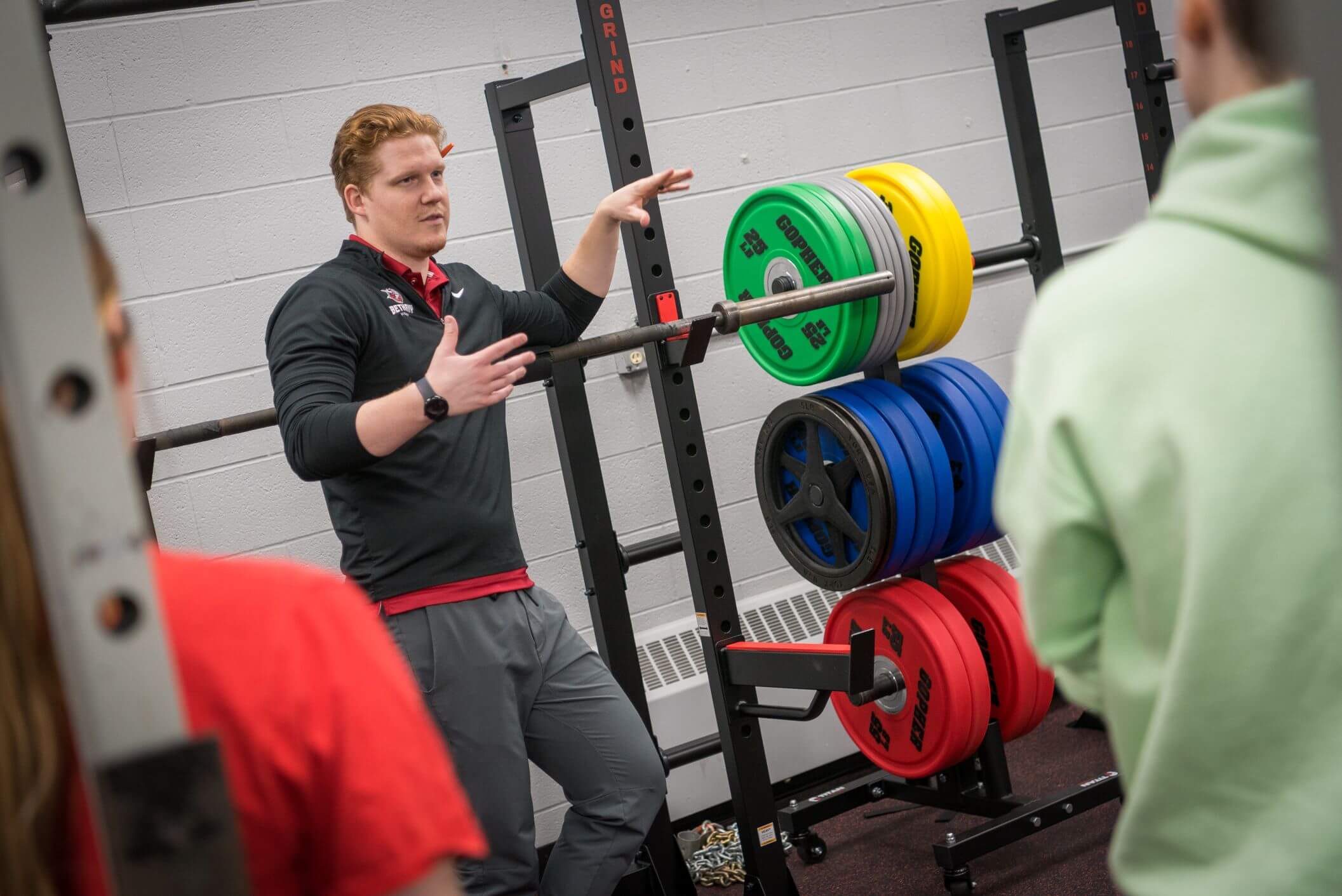
Dr. Lucas Seehafer teaching a lab session during his strength and conditioning course at Bethany Lutheran College. Photo Credit: Bethany Lutheran College/David Norris.
Advice for Future Doctoral Students
Reflecting on his CSP Global doctoral experience, Dr. Seehafer encourages prospective students to be honest about what it takes to succeed in an online program. “Online programming is not for everyone. In order to get the most out of your education, you need to be self-motivated and dedicated to your craft and passions.”
He also encourages students to think boldly about their research:
“Don’t be afraid to aim big for your research project. Your dissertation committee is there to help guide you and mold it into something that can be successful. Lean on your committee!”
Looking ahead to the future, Dr. Seehafer plans to continue wearing multiple hats as an educator, clinician, and researcher. For someone who has always enjoyed wrestling with difficult questions, the next challenge is simply another opportunity to learn. If his work to date is any indication, that curiosity will continue to make an impact both in the classroom and far beyond it.
Inspired by Dr. Seehafer’s story and want to learn more about our online doctoral degree in kinesiology? Learn how CSP Global’s Doctorate in Kinesiology program can help working professionals advance their research interests, academic goals, and career opportunities.